Saturday, June 30, 2012

Raw Milk Pasture-Fed Cheese

5 Spoke Creamery Cheese

When I found a selection of four artisanal small batch cheeses by 5 Spoke Creamery at Whole Foods Market the other day I could not wait to try them.  What really got my attention is that the 5 Spoke Creamery Cheese meets both of my cheese criteria. 5 Spoke cheese is both RAW and PASTURE-FED!

Because raw milk cheese is not made from milk that has been heated and pasteurized it is a rich source of probiotic bacteria which help colonize the digestive tract and keep us healthy.  Raw milk and raw milk cheese, unlike pasteurized milk products, also contain important enzymes which help us to digest the fat, protein, and sugar in the milk.

Pasture-fed cheese is superior to conventional cheese because the cows have eaten a natural diet, in fact, the diet nature intends them to eat, and they are treated humanely.  Grass-fed dairy products contains a good ratio of essential fatty acids, conjugated linoleic acid, vitamin A and vitamin E.

TUMBLEWEED cave-aged eight to nine months is a salty semi-hard cheddar with a nice crumble. 

REDMOND CHEDDAR aged six months is a buttery well-balanced cheddar.  Redmond Cheddar is my personal favorite.

WELSH CHEDDAR is a mild, sweet, creamy cheese without any hint of sharpness.

HERBAL JACK flavored with herbs, chives and garlic (the garlic really comes through) begs to be melted on quesadillas.

Tuesday, June 19, 2012

Lemon Curd Parfait With Strawberries

Lemon Curd Parfait With Strawberries
Brett and Charlotte introduced me to a delicious new flavor sensation, an absolute favorite summer indulgence, that we have been enjoying with a variety of summer berries, such as fresh sliced strawberries, blueberries, and blackberries.  We haven't tried raspberries yet!

I am admittedly a huge fan of lemon curd.  While some may nostalgically remember a first kiss, I, on the other hand, nostalgically remember the exact time and location that I had that first luscious puckery spoonful of lemon curd.  Lemon curd, a traditional British food, is usually spread on the likes of scones and crumpets or used as a filling for tarts, pies and cakes.  Homemade lemon curd, by-the-way, tastes infinitely better than ordinary lemon pie filling because, unlike your standard commercial pie filling, lemon curd is made with REAL BUTTER and is thickened with EGG YOLK and PECTIN (which is naturally present in the lemon) rather than ubiquitous cornstarch.  And though I won't deny that lemon curd is delicious in its own right I am especially partial to lemon curd parfait.

If you are a fan of lemon desserts, as I am, and have not tried lemon curd parfait what are you waiting for?

LEMON CURD PARFAIT

5 pastured eggs
3 pastured egg yolks
1 c. organic sugar
3/4 c. fresh lemon juice
pinch of sea salt
1/2 c. cold grass-fed cultured butter, cut into cubes
1 c. organic heavy cream - raw cream is best
1 T. organic cane sugar or sugar substitute
1 t. vanilla extract

Berries

4 - 5 c. mixed fresh berries, such as blueberries, raspberries, strawberries, or blackberries
3 T. sugar (optional)

Whisk eggs, egg yolks, and sugar in the top of a double boiler until well mixed.  Set over a saucepan filled with simmering water at medium heat.  Add the lemon juice and sea salt.  Cook and whisk constantly until thickened, about 0 minutes.

Remove from heat and whisk in butter cubes until smooth.

Cool slightly and then refrigerate until firm, at least an hour.

Combine cream, sugar and vanilla in a bowl and beat on high speed until soft peaks form.  Fold half of the whipped cream into the chilled lemon curd.

Gently toss the berries with sugar if desired.

To assemble spoon lemon curd into the bottom of 6 parfait glasses, top with berries and alternate layers of lemon curd and berries.  Top with a dollop of whipped cream.

SUGAR SUBSTITUTE

For those of you that are sensitive to sugar, as I am, you may substitute birch sugar for cane sugar in the recipe. I have made it both ways and with magnificent results. The birch sugar version was truly unmistakable from the cane sugar version.

Saturday, June 16, 2012

The Moveable Feast

Edible Adventures On The Road

We took Edible Adventures on the road this week and visited Yellowstone National Park.  The car literally bulged with five fully loaded ice-chests (one per adult in the party) along with two big boxes of food.  You would think we planned on being snowed-in in July, and despite picture perfect weather, that hovered in the low seventies, we still managed to make quite a dint in our cache of provender.

One of the most memorable eatables of the week, we have Carrisa to thank for.  She brought a beautiful Le Crueset pie pan full of that iconic Scottish dish rumbledethumps.  It was quite the hit, cut into thick delicious wedges, and served as an accompaniment to our crock pot chicken dinner.

Carrisa's Rumbledethumps

2 1/2 lbs. organic russet potatoes, peeled and coarsely chopped
1/2 head organic green cabbage, thinly sliced - about 8 cups
1/2 c. unsalted pastured butter
1/2 c. organic sour cream
1/4 c. chopped chives
1 c. grated extra-sharp cheddar cheese (4 oz.)

Preheat oven to 350 degrees.

Butter an 8-cup baking dish.

Cook cabbage in a large pot with boiling water until tender- about 2 minutes.  Using a slotted spoon, transfer cabbage to a bowl.

Return water to a boil and add potatoes.  Cook until tender.   Drain and return potatoes to the pot.  Add butter and sour cream and mash the potatoes.

Mix in chives and cabbage.  Season with salt and pepper to taste.

Spoon mixture into the prepared baking dish.  Sprinkle with cheese.  Bake about 35 minutes or until the cheese begins to bubble.

Sunday, June 10, 2012

The Local Loquat Conclusion

Loquat Muffins

The suspense surrounding the local loquat food adventure is finally drawing to its conclusion, and those of you who like happy endings will be particularly satisfied to learn that all three sister condiments, loquat-rose butter, loquat chutney, and loquat ketchup, have found their perfect food compliment.

The loquat-rose butter has been transformed into delicious little gluten-free muffins, the loquat chutney into a brilliant dish of moroccan rice, and the loquat ketchup, which we have been eating with gusto and tastes good with everything so far, as we continue to discover new ways to enjoy it, is particularly yummy with chicken, salmon burgers, and sweet potato fries.

The highlight of my day was baking these extra tasty loquat muffins and sharing the loquat muffin debut with Brett and Charlotte.  My baking adept, Carrisa, was conspicuously missing from the mix today as she packs for a much needed holiday.

Gluten-Free Loquat Muffins


1 c. loquat butter
1/2 c. honey
2 organic eggs
1/3 c. organic butter
1 c. white rice flour
1/2 c. tapioca flour
1 t. cinnamon
1/2 t. cardamom
1 1/2 t. baking soda  - see recipe below
1 t. baking soda
1/2 c. chopped pecans

Mix the wet ingredients - loquat butter, honey, eggs, and butter until thoroughly blended.
Stir the dry ingredients together - flour, spices, baking powder, baking soda, and pecans.
Create an indention in the flour mixture and pour the wet ingredients into the dry, stirring to incorporate.
Pour into silicon lined muffin tins and bake at 325 for 25 minutes.

Homemade Baking Powder


2 t. cream of tartar
2 t. baking soda
Mix together.

Saturday, June 9, 2012

Local Loquat Chutney


Local Loquat Chutney

Those of you who have been following some of my recent loquat food adventures and misadventures will be interested to learn of my most recent loquat food triumph.

The effort to "marry up" loquat chutney, one of the three sister condiments I prepared this month, with her perfect food compliment, has been fraught with frustration and disappointment, at best.

Yesterday, still wondering what to do with the local loquat chutney, and growing a bit discouraged, I might add, I decided to give it another try.

Last night I roasted a panful of organic chicken thighs, (what could be simpler?), in the oven for dinner.  I made a pot of brown basmati rice in Brett and Charlotte's buttercup-colored Le Cruiset cook pot.  (I wish they still made that particularly food-compatible color of cookware by-the-way)  When the rice was cooked and fully tender I added the zest of one whole organic lemon, a squirt of two of lemon juice along with a generous handful of fresh minced parsley.  In addition, I prepared a side of cooked greens with crumbled feta.

As I plated up dinner last night I cautiously placed a spoonful of loquat chutney, seasoned with lemon, lemon rind, raisins, cumin, thyme, fennel seeds, coriander and red pepper flakes, beside each serving of basmati rice.  After a first hesitant nibble I decided to throw caution to the wind and stir the loquat chutney right into the rice to see what happened.

Voila!  Perfection!  Yes!  Food perfection!  I was SO excited.

Local loquat chutney is a fantastic accompaniment to rice!  It is a marriage made in heaven.

Initially, the true character and flavor of loquat chutney, obviously not readily apparent to me, remained undiscovered and unappreciated, until I combined it with its perfect food compliment, rice, and viola! an unmistakable distinctive Moroccan character came clearly through.

What would, otherwise, have been quite an ordinary meal suddenly became extraordinary.

The chutney fully lived up to expectation, in fact, exceeded expectation.  Not only did the loquat chutney make the rice taste better,(certainly the primary requirement of a condiment!), but, as an added bonus, the loquat chutney, with delicate flecks of orange fruit, bits of raisin and spice made the rice look better too!  To fully appreciate that particular food fact please consider what globs of ketchup, mustard, and mayonnaise, or any other food condiment for that matter, do for the esthetics of a dish.

Friday, June 8, 2012

Much Ado About Loquats

Three Sisters

Well, here I am 700 miles away from home and about to conduct the first taste test.  Drum Roll. The three well-traveled sister condiments, also about 700 miles away from home, loquat butter, loquat chutney and loquat ketchup, are assembled and ready for their debut.

We did the preliminary preview tasting yesterday evening.  Carrisa said that the loquat-rose butter tasted like she had a rose pompadour in her mouth. It was a bit too flowery for her taste.  Brett and Charlotte, who are recovering from colds, which might be a factor in how well they taste, did not find the flowery rose flavor over-powering or objectionable.

What we ultimately have in mind for the loquat-rose butter is to make it the base for gluten-free loquat-rose muffins.  I am sourcing ingredients as we speak.

I did try the loquat chutney with toasted baguette and a couple of different cheeses and I can't say I am over the top about it.  Charlotte said that the chutney reminds her of salsa and she would like to try it on a taco.  Charlotte also suggested that we roast a chicken and serve it with parsley-lime rice and loquat chutney.  Brett could not decide what kind of meat would be most compatible with the chutney.

We all feel that we are trying a bit too hard to "marry up" the loquat chutney.  Brett, put it well, when he said we have been trying to find food to make the loquat chutney taste better.  Since the whole idea of a condiment is to enhance the flavor of food and give it some "wow" and "pizazz" I have to admit I am disappointed.

Everybody agreed that the loquat ketchup was very tasty.  It was definitely everybody's favorite.  Brett and Carrisa said that it reminded them of barbecue sauce and would like to try it with french fries or sweet potato fries.  Charlotte suggested that it be used to marinate chicken.

Overall it was a good first effort at condiment making and I want to especially thank my intrepid and willing taste testers.

Thursday, June 7, 2012

What Happened To the Local Loquats - Part 3


No Ordinary Ketchup
The highly perishable loquat fruit has a short season and shelf life that lends itself to traditional methods of food preservation such as preserves, chutney, and condiment preparations.  I hear the inventive Japanese make loquat wine.

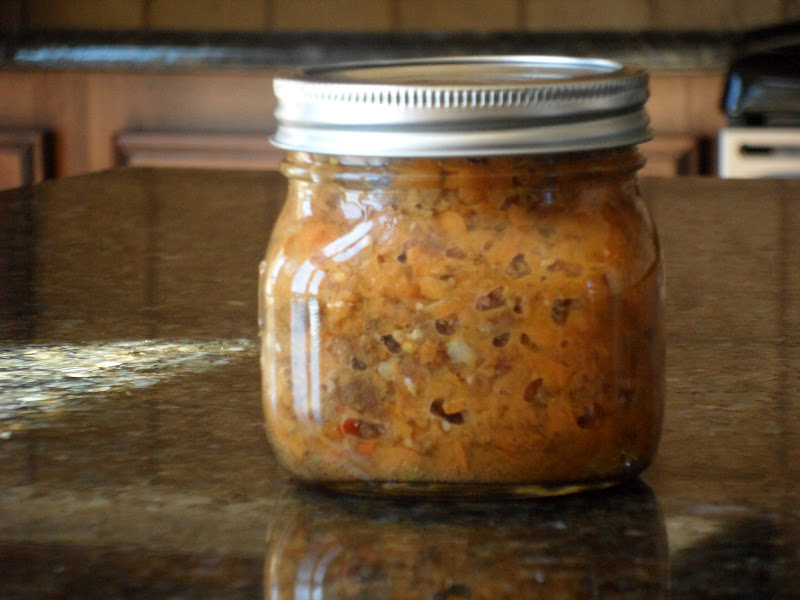
In an effort to preserve this most time sensitive fruit I experimented with several different condiment preparations.  My most recent posts, (have you noticed how often things appear in clusters of three?), Tuesday's loquat butter, Wednesday's loquat chutney, and today's loquat ketchup, are sister posts that take their parentage from the same prolific loquat tree.

Without the notoriety that her attention-getting sisters have received in recent posts, the ill-flavored loquat rose butter (that Carrisa will be working on), or the spicy and assertive loquat chutney that I hope to marry up with goat cheese, loquat ketchup, the rich color of umeboshi plum, on the other hand, has a complex flavor that I find surprisingly pleasing.

I honestly don't know how I came up with the idea of making loquat ketchup.

I found a recipe for traditional tomato ketchup in Sally Fallon's cookbook "Nourishing Traditions" and randomly wondered what loquat ketchup would be like.

Here is the recipe that I made based on her ketchup recipe:

Loquat Ketchup


4 c. loquats, washed and pitted
1 T. sea salt
1/2 c. maple syrup
1/2 c. fish sauce
1 clove garlic
1/4 c. whey or 1 t. probiotic powder


Cook the loquats in a little bit of water in a covered pan until they are tender.  Cool slightly and blend in blender or food processor until they are smooth and creamy.


When the loquats are room temperature mix all of the ingredients together until well blended.  Place in two pint-sized wide-mouth Mason jars.  The top of the ketchup should be a least 1-inch below the top of the jar. Leave at room temperature for about 2 days before transferring to fridge.

As a food aside, I did a little internet research on the history of ketchup making and found that if you go back to the 17th-century, when ketchup was still a regional artisanal food preparation and not the ubiquitous product, synonymous only with the tomato, that it is today, you will find that ketchup, first brought from China by British sailors, could actually be made from any number of ingredients. Pontac ketchup, popular in the 19th-century, for instance, was made from elderberry juice, shallots, anchovies and spices.  I am not a huge tomato lover myself, tomatoes are way too acidic for me even on the best of days, unless absolutely dead-ripe and fresh from the vine. This loquat version of traditional ketchup, which features garlic, fish sauce, maple syrup and a little fermentation, is just the tasty ticket.  Most importantly, though there are sure to be a few refinements, I LIKE IT!